Health and Safety Policy — Flat Clearance Whitechapel
 Flat Clearance Whitechapel is committed to maintaining the highest standards of health and safety for employees, contractors and members of the public affected by our flat clearance and rubbish removal operations. This policy sets out our approach to risk management across all waste removal and rubbish collection activities, and describes the responsibilities and controls we put in place to ensure safe working practices. The aim is to prevent work-related injury and ill health, and to comply with relevant legislation and good industry practice for flat clearance and waste disposal services.
Our policy applies to every person engaged in our waste management work, including office staff, site crews, drivers and subcontractors. Every operative is expected to follow safe systems of work for rubbish disposal, bulky item removal and general site clearance. We actively promote a culture where safety is integral to the service delivery of rubbish collection and asbestos-safe handling protocols where required. Risk awareness and personal responsibility are central to our approach.
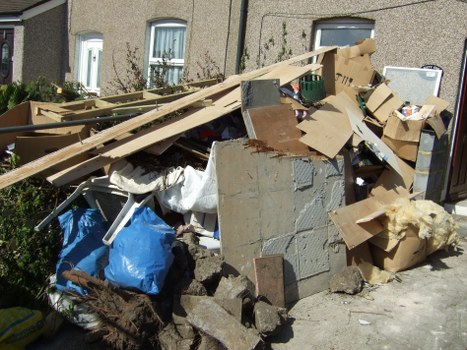 This document provides a framework for the identification, assessment and control of hazards encountered during flat clearances and related rubbish company service area tasks. It includes measures for manual handling, use of powered equipment, vehicle operation, slip/trip prevention, and safe segregation of recyclable and non-recyclable materials. Hazardous waste handling, including sharps or chemical contaminants, is managed under specific procedures that must be followed at all times.
Scope, Duties and Legal Compliance
We will meet our legal obligations by implementing documented risk assessments, safe working procedures and ongoing staff training. Senior management is responsible for ensuring that sufficient resources are available for safety controls and that statutory duties related to rubbish removal service provision are met. Supervisors must enforce the policy on site and ensure that operatives are competent to carry out their duties.
 Employees and contractors have a duty to take reasonable care for their own health and safety and for others who may be affected by their actions. This includes using provided PPE, following instructions, reporting hazards, and cooperating with any safety measures introduced by the company. We encourage reporting of near-misses and unsafe conditions so that continuous improvement in site safety and waste clearance practices can occur.
To support these duties we maintain written risk assessments and method statements for typical tasks such as mattress removal, kitchen clearance, and bulky waste collection. These documents set out control measures such as team lifting, mechanical aids, protective gloves and eye protection, and safe stacking procedures to reduce the likelihood of injury during rubbish collection operations.
Risk Control, Training and Operational Measures
We use a layered approach to risk control combining elimination, substitution, engineering controls and administrative measures. Where possible, hazards will be eliminated before work starts. Otherwise, controls will be put in place to reduce risk. Regular training ensures that staff are competent in manual handling, the use of trolleys and sack barrows, and the safe operation of vans and communal access areas during flat clearances and waste removal jobs.
Key operational controls include:
- Pre-job risk assessment and toolbox talk for every clearance and rubbish collection task;
- Mandatory use of appropriate PPE and provision of hygiene facilities for crews;
- Vehicle loading limits, securement of loads and safe reversing procedures;
- Segregation and labelling of hazardous items and clear instructions for disposal;
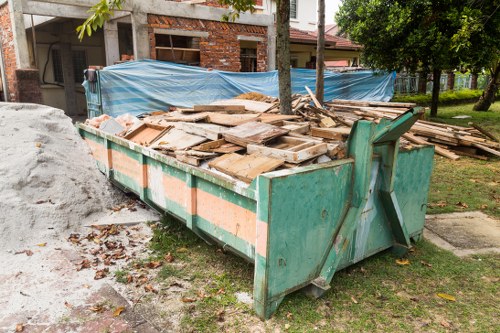 Our training programme is a combination of induction, periodic refresher sessions, and task-specific instruction. New operatives receive supervised practical training on flat clearance duties and rubbish removal techniques. Supervisors receive additional training in incident investigation and corrective action planning to ensure that lessons are captured and communicated across the rubbish collection service area.
Incident Reporting, Monitoring and Review
All incidents, injuries and near-misses must be reported promptly and recorded. Investigations will seek to identify root causes and implement corrective actions to prevent recurrence. The company will monitor safety performance using defined indicators such as incident rates, training completion and audit findings for flat clearance and waste removal activities.
 Regular site inspections and audits will be carried out to ensure compliance with this policy and with safe working procedures. These audits inform management reviews that check the continuing suitability of the policy, the effectiveness of controls, and opportunities for improvement in rubbish removal and clearance operations.
In summary, Flat Clearance Whitechapel sets out a clear commitment to safety across all aspects of our waste removal, rubbish collection and flat clearance services. Management leadership, staff engagement, adequate resourcing and continuous improvement are the pillars of our approach. This policy will be communicated to all employees and reviewed at least annually or when significant changes to operations occur, ensuring the ongoing protection of people and the environment while delivering professional rubbish clearance and waste management services.